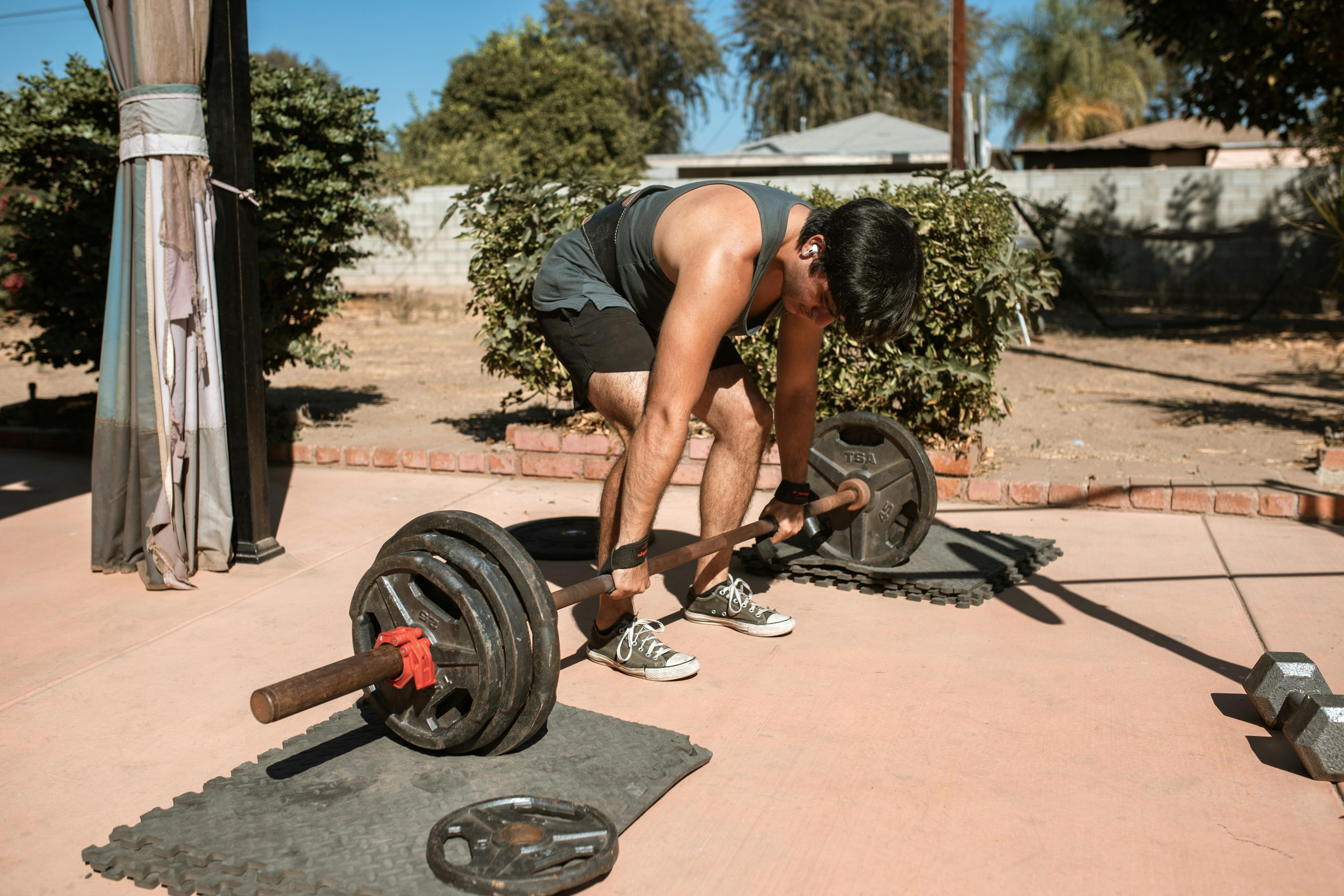
Deadlifts and Lower Back Pain Part 2: Don't round your back!
If you read part one you now understand that the deadlift is not a risky exercise. It is likely less injurious than bench press or other shoulder exercises, and exercise in general is not only safe but helps prevent injury when programmed appropriately.
I am not writing these articles because I love deadlifting, though I do enjoy a deadlift workout. I am writing because I want more people to get the benefits of strength training in general and deadlifts specifically for increasing performance and decreasing lower back pain and injury incidence.
There are some very good reasons to do deadlifts which we will expand upon in part 3 of this series about programming. There are also good reasons to choose a different exercise, but as discussed in part 1, the reasons most often given for avoiding deadlifts are just uninformed opinions. So we can now move on to some specifics about how to deadlift.
Part one may not have been earth shattering if you have been in the exercise science, rehab or general strength training space for a while. This part, however, I will present a more comprehensive view on deadlift technique than I have seen from anyone else.
The opinions you will see or hear the most (online) can be broadly divided into two camps, listed below. If you have spoken with a rehabilitation professional or coach about deadlifts, you will likely have heard a slightly less polarized opinion, but maybe not.
Movement optimists (younger/‘evidence based’ physiotherapists mostly)
Your technique does not matter because the body can adapt to the stress if load is managed properly
Not only do you not need to worry about your back rounding, but you should intentionally train in as much flexion as possible to strengthen that range of motion (Jefferson curl)
Note how they never say the same thing about spinal extension…
Old School Biomechanics (Older physiotherapists, most trainers, followers of Dr. Stu McGill)
Any spinal flexion is a significant risk for lower back injury
Technique must be perfected first before loading
You must not progress unless your lift looks ‘perfect’
Have a look at these images:

Image borrowed from (1)
The one on the left is definitely in extension. Or at the very least that is a neutral spine position right? Wrong.
The image on the left shows the subject in 22º of global lumbar spine flexion. Which is approaching 50% of the maximal amount of flexion ROM. Perhaps even more surprising is the fact that the picture on the right, which many people would say is neutral (flat), or maybe slightly flexed is actually maximally flexed. This makes sense if you just think about the standing orientation of the lumbar spine. It is lordotic, so flattening that requires substantial flexion - in this case maximal flexion.
See below for the figure showing ROM data. You can see that the bottom of the grey bar on the right is way above the bottom of the black bar which is ‘neutral’ (standing posture). Actual extension would be below the 0 line (x axis).

There are several other studies that show the exact same thing. Here are some images from a study on powerlifters and weightlifters. They looked at the lumbar spine kinematics for 4 different lifting conditions; high hip deadlift, low hip deadlift (~clean setup), high bar squat and low bar squat (2). Have a look at the figure below, then take a second to try to guess what they found.

Image borrowed from (2)
What do you think? Neutral, right? Maybe you are already catching on.

Image borrowed from (2)
As the figure above shows, both of the deadlift techniques in this study produced over 75% of full flexion range of motion in the lumbar spine. They reported the point in the lift where the maximal flexion ROM happened, no surprise it was at about 10% of the lifting cycle for the deadlifts and about 50% for the squats (in the hole) (2).
What’s going on here? How is it that what looks to be a lordotic spinal position is actually sometimes near maximal flexion. What I think is happening is the lower thoracic, and thoraco- lumbar junction is extending significantly as the hips and lower lumbar spine are flexing. So you still see an arch in the back, but it is just at a different location (level of the spine) when hinging or squatting than when standing. Here are a couple pictures from instagram that make this more obvious.


In this video of a GHD back extension that CrossFit Training page posted on Instagram you can clearly see the location of the lordosis changes dramatically. At the start/top position there is perhaps a slight lordosis in the lower lumbar area, though not much. It is located just above the bottom of her shirt. At the bottom position, you can see the lumbar spine has flattened (which is substantial relative flexion) and a significant lordotic curve is now visible roughly in the middle of her back slightly above the letters on her shirt.
Funny enough one of the cues they give in the video is to ‘maintain a neutral spine’. The effort to maintain a neutral spine is what causes the arch in the mid back. I don’t disagree with the cue, the effort or even the result. But it ain’t neutral by any reasonable definition. And If someone could not arch their thoracic spine like that, it wouldn’t make the exercise any less effective, or any riskier for the lower back. Even though a rounded back posture wouldn't look as ‘pretty’ to some.
For those who are unconvinced about the universality of lumbar spinal flexion while lifting, here is a study by Andrew Vigotsky, one of the most well respected spinal biomechanics researchers. He and his colleagues looked at lumbar kinematics during a goodmorning. They measured about 25º of lumbar flexion at the bottom of the goodmorning. To put that in perspective, 25º is likely about half of maximal lumbar flexion ROM (3).

Image borrowed from (3)
So far the movement optimists will be cheering in agreement and the old school biomechanists will be quivering in the corner. But here is where the two worlds collide. This is one part of the story I have not heard anyone tell.
If you are flexing your lumbar spine substantially with basically all lower body training, then you don’t need to intentionally train spinal flexion!
Deadlifts already prepare you to lift with your back flexed because you are flexing your back, whether you like it or not. So just keep lifting consistently using exercises that are specific to your goals. Do you need to be prepared to lift with your upper and lower back fully rounded like in a Jefferson curl? Almost certainly not. If you do, then go ahead and practice.
So to some extent, technique can be fluid and take on various different forms without being inherently dangerous. Does that mean that there are no differences in risk between different techniques? Almost certainly not.
This is where we have to be more hypothetical and rely on logical inference because we don’t have long term studies comparing rounded back deadlifts or Jefferson curls to more neutral deadlifts for injury risk. All we have is biomechanical studies examining the forces on the spine in different lifting postures, and epidemiology which is lacking detail about specific spine positions and loads.
Here is a simple question to make a point. Can you tear a ligament without putting tension on it? The answer is definitively no, you can’t. It then follows that tearing ligaments on the posterior aspect of the spine can only happen with a high degree of flexion. So loading end range flexion is a greater risk for certain injuries than neutral. But so is extension for other injuries. The risk for each injury varies with the position and load.
The tension on passive structures in the spine increases dramatically beyond about 40% of maximal flexion ROM (4). So going past about 40% of flexion ROM will increase risk for disc/ligament injury, all else being equal. As a side note, the term neutral spine has been adjusted by some to mean a range of positions within this zone of low passive stiffness, though I do not think this is common knowledge yet.
But training into significant extension increases the risk of joint injury to the posterior bony elements of the spine. Sports like dance and gymnastics have a very high prevalence of bony defects in their spines from the repeated extension (5). This point is just to demonstrate the broader landscape of spine injuries. Extension based injuries are unlikely to happen lifting weights as we have seen.

Would it be better to have the same performance without the damage done to the body? Yes, but life is all about tradeoffs. In the real world, we don’t have biomechanical analysis of our spinal positions and joint forces. We have exercises and outcomes. Do you want the benefits of the exercises? Then you must accept some risk. The risk is modifiable based on the specific task and the loading variables - volume, intensity, frequency etc.
This is where the programming and coaching come in. A good coach is (consciously or subconsciously) doing risk analysis constantly. For a team sport athlete with lower back pain, they will very likely choose something other than a conventional deadlift to train hip extension strength. For a powerlifter, the cost benefit calculation will look very different.
Given that spinal flexion, or any spinal motion for that matter, is not inherently dangerous, we should focus first and foremost on following an appropriate loading progression. With that in place, the more the technique deviates from ‘neutral’ positioning, the more conservative we should be with the loading and the rate of progression.
So where does this all leave us with lifting technique?
Should we just yolo banana back every deadlift because we can’t avoid flexion anyway? If you think the answer is yes I think you are either not serious about your position, or you have not spent much time thinking deeply about this, or actually coaching athletes. Those people posting things like this online are likely trying to use outrage to maximize engagement.
Technique for pain and injury
This does not have to be as complex as most people think. For daily tasks, when someone is in pain, they can adopt whatever lifting technique is more comfortable. Crazy right? As long as they respect their abilities and tolerance (load management), then do whatever is comfortable.
This is not a recommendation to go to the gym and start ripping heavy deadlifts with a brand new technique because it feels fine. That is absolutely not respecting your tolerance. This is, however, encouragement to keep moving and exercising and getting your chores done by finding a comfortable technique to do so. In part 3 we will discuss how (and why) to program deadlifts during pain/injury.
Follow a gradual progression, increasing volume and intensity with daily activities or exercise to increase your ability to tolerate the new techniques, or slowly reintroduce your regular technique as pain allows. For a significant injury you will likely have to be more strict with limiting certain activities temporarily. You will probably also benefit from some specific/isolated movement and loading of the injured tissues to make sure it heals properly.
Technique for performance
It will probably be less controversial for lifting performance than for pain and injury, to say that there are better and worse techniques. The naturalistic experiment demonstrates this by the convergence of technique for specific goals between vastly different individuals. Running, jumping, throwing, lifting or any other movements look very similar between individuals performing at the highest level.
There are several factors to consider when analyzing lifting technique. Here are a few:
Outcome of interest
Bar path and excursion
Mechanical advantage/leverage
Length-tension relationships
Force and strength curves
This article will go on forever if we go through all of these points in detail, so let’s just do a quick summary of each. This is yet another case for hiring a coach, because these things are hard or time consuming to explain and are more or less automatic for an experienced coach.
As mentioned above, exercise selection depends primarily on the goals of the athlete performing them. We will do a more thorough breakdown of programming in part 3 of this series, but for now suffice it to say - outcomes first.
The bar path for the strength sports is ideally close to vertical for maximum efficiency. Techniques that produce significant/unwanted bar translation (frontal or transverse plane) or rotation (transverse plane) should be modified.
Leverage can be maximized for strength sports, or minimized for hypertrophy training depending on technique and equipment choices. For strength we generally want to maximize the load/weight, so optimizing your technique for your body shape/proportions is paramount. For example, someone with relatively long femurs may be better off deadlifting sumo to keep the hips closer to the bar.
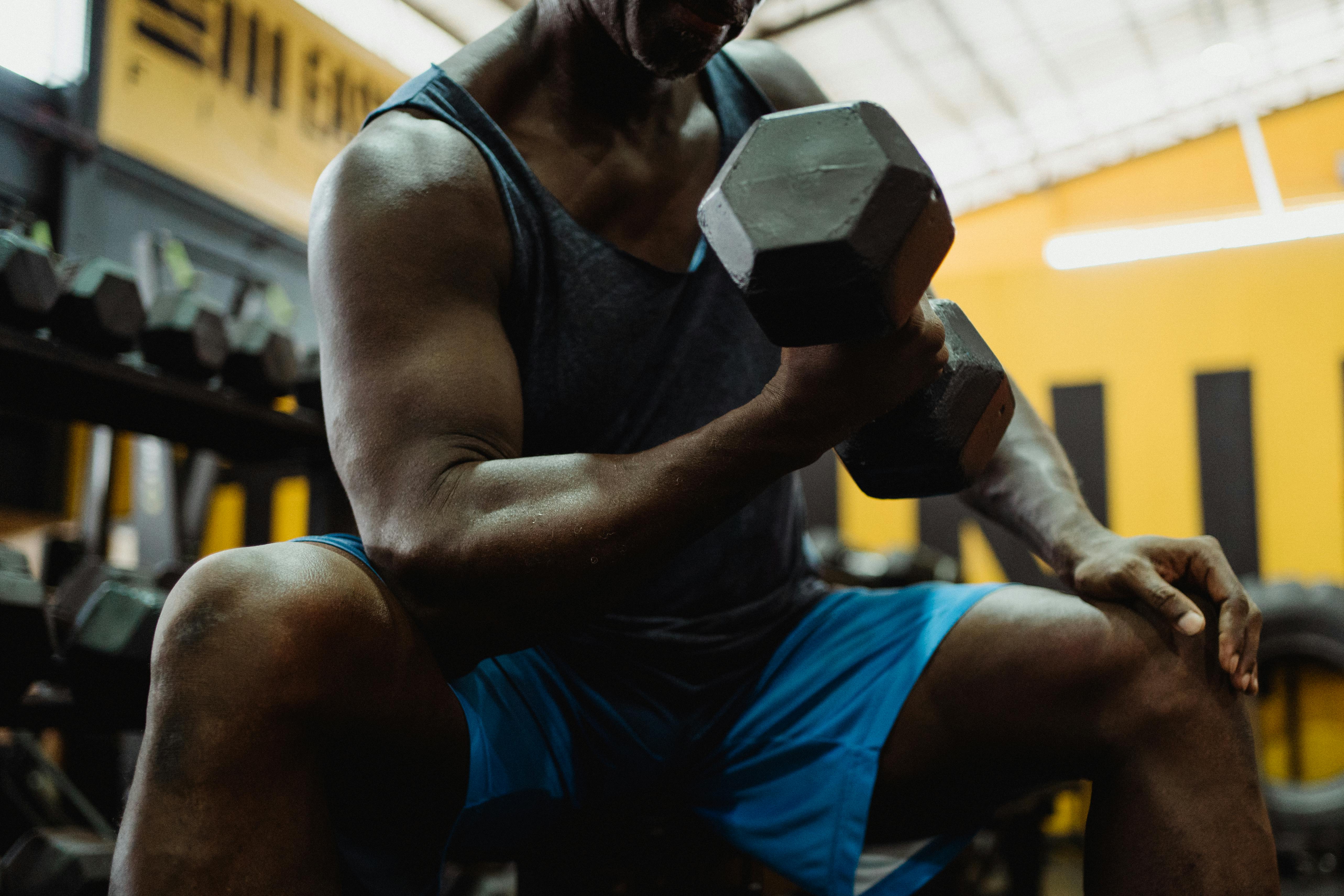
For bodybuilding we want individual muscles to work as hard as possible with no interest in the amount of load/weight used in any given workout. So working a muscle in a position of mechanical disadvantage allows a better stimulus to fatigue ratio i.e. you can use less external load to get the same result.
If you are doing all of these things well, following an appropriate progression, optimizing your recovery you are probably already doing everything you can to reduce injury risk. From there, your risk will be determined by your exposure - the more you do, the higher your risk. So athletes wanting to attain higher levels of performance will necessarily take on more risk than those just training for health or hobby.
There is some evidence showing that a flexed lumbar spine curvature produces higher isometric hip and back extension torque with lifting (6,7), another more comprehensive study showed that the strongest spinal posture and curvature for lifting depends on the individual (8).

Image borrowed from (8).
Maybe we should shift our use/interpretation of ‘keep your back straight’ or ‘don’t round your back’ to performance cues rather than warnings.
Trying very hard to keep your back ‘straight’ during a deadlift, squat or otherwise, is the only way to lift a very heavy weight. If you didn’t do that, your back would just curl and the weight would not move. So it can just be a cue for those that need it, like chest up, or knees out. Others may benefit from more cueing for intra-abdominal pressure or otherwise during a deadlift. Hire a good coach if you need help.
So let’s sum things up.
You are flexing your lumbar spine when you lift, deal with it
Which posture is strongest (flexed, neutral etc.) depends on the individual and the task
Follow a proper progression and prioritize recovery to minimize risk
Higher degrees of flexion are theoretically riskier, all else being equal
The deadlift is a very effective exercise for developing back and hip strength, improving lifting ability (functional), and thus preventing injury during lifting tasks
References
Holder, L. (2013). The effect of lumbar posture and pelvis fixation on back extensor torque and paravertebral muscle activation. In Open Research (Auckland University of Technology). http://hdl.handle.net/10292/7204
Edington, C. (2017). Lumbar spine kinematics and kinetics during heavy barbell squat and deadlift variations. In University Library - University of Saskatchewan (University of Saskatchewan). http://hdl.handle.net/10388/8539
Vigotsky, A. D., Harper, E. N., Ryan, D. R., & Contreras, B. (2015). Effects of load on good morning kinematics and EMG activity. PeerJ, 3, e708. https://doi.org/10.7717/peerj.708
Buchman-Pearle JM, Pinto BL, Barrett JM, Nenadov EM, Callaghan JP. Lower limb postures resembling sitting and standing alter lumbar angles along the passive stiffness curve. J Electromyogr Kinesiol. 2023 Apr;69:102752. doi: 10.1016/j.jelekin.2023.102752. Epub 2023 Jan 28. PMID: 36746068.
Toueg CW, Mac-Thiong JM, Grimard G, Parent S, Poitras B, Labelle H. Prevalence of spondylolisthesis in a population of gymnasts. Stud Health Technol Inform. 2010;158:132-7. PMID: 20543413.
Mawston G, Holder L, O'Sullivan P, Boocock M. Flexed lumbar spine postures are associated with greater strength and efficiency than lordotic postures during a maximal lift in pain-free individuals. Gait Posture. 2021 May;86:245-250. doi: 10.1016/j.gaitpost.2021.02.029. Epub 2021 Mar 1. PMID: 33799053.
Daggfeldt K, Thorstensson A. The mechanics of back-extensor torque production about the lumbar spine. J Biomech. 2003 Jun;36(6):815-25. doi: 10.1016/s0021-9290(03)00015-0. PMID: 12742449.
Pinto BL, Beach TAC, Callaghan JP. Modifying Trunk Inclination and Low Back Curvature Inconsistently Affects Isometric Multijoint Lifting Strength Across Individuals. J Appl Biomech. 2025 Aug 11;41(5):442-450. doi: 10.1123/jab.2024-0334. PMID: 40789574.